Riot and Frolic

a mostly ballroom dance, but also a bunch of other stuff, blog

  • "Collegiate Competition" and "Many Amateur Competitions" or "Ballroom Newbie Competitions" could all be interchanged in the title today, but seeing as how I just judged a collegiate comp last weekend, that's my title.

    Why I Didn't Love You

    This is where it was really tempting to pull some of the 18,000 photos from the DanceFest Flickr album to use as examples, but I'm super nice, so I didn't.  

    • You can dance International Rumba on time, but not either style (American or International) of Cha Cha… or American Tango.  Please explain.  No seriously, tell me how this happens.
    • Body contact trumps good frame?  Dancing in body contact is super helpful, but if it messes up your frame (like everyone's shoulders are now in their ears and the guy's left hand is behind the lady's back), you all need to take a small step away from each other for awhile, build the correct muscles up, and figure that top-line out.  
    • The walk-on with the arm out.  This has perplexed me for years.  You can read more about it here. Please, just walk onto the floor.  
    • The really elaborate invite.  I love a good invite to dance.  It's so classy.  But sometimes, your invitation to dance gets a little crazy.  Best advice?  Keep it simple, stupid.  And the part that sounds really mean?  Don't let your personality show too much.  Not there anyways.  It's kind of like walking-onto-the-floor thing.  Just get into frame, y'all.
    • Your footwork is a constant mystery.  Heel leads on 3 in Waltz, toe releases in Rumba, or just flat feet through entire dances: if your footwork isn't correct, your basic movement usually isn't either.  
    • International isn't American and vice versa – there's no Crossbody Leads in International Cha Cha and Rumba, there's no Closed Promenade and everything is in 8s in American Tango, American Waltz has Open Position, Jive and Swing have totally different chassés… I could literally go ON and ON.  And I'm available for private lessons.  

    Why I Loved You

    These critiques are more fun for everyone.

    • Your unbridled enthusiasm.  While most professionals are passionate are their dancing, it's been tempered by years of participation and politics, and your passion is palatable.  Watching you in the ballroom, I literally feel like bouncing up and down and yelling "DANCING!" while hugging all of you.
    • Your love for dancing.  Have you ever had a friend who you thought loved you too much?  I sense dancing might feel that way about you sometimes.  It's intense and great and a little bit scary, therefore all the more exciting to see.  
    • You dance like no one is watching.  Keep doing that, and apply it to all things.
    • Team work.  While ballrooming is a two-person sport on the floor, your ever-expanding teams and the support you give to one another off the floor is endearing.
    • Even if one of you looks like you're going to throw up, the other one looks so patient and supportive.  Partnership, man: you're nailing it.
    • The occasional count-out-loud.  Beginners are always fun to watch dance, NOT BECAUSE WE'RE MAKING FUN OF YOU, but because we were all there once.  But the lead counting out loud?  MY FAVORITE.  The follow counting out loud for the lead?  My second favorite. 
    • The facial expressions.  In case I wasn't sure you were having fun, your face is clearly expressing your enjoyment.
    • The proud parents.  While my Facebook feed was basically everyone changing their profile and cover pictures for two days, I also saw many of you tagged in pictures from your proud-as-a-peacock parents, who were clearly bursting at the seams to show off how well you clean up, how fancy you are, and what good genes you obviously inherited.  
    • The social dances.  Again, almost scary with the level of enthusiasm and energy level, and as long as I spectate from afar, it's clear you love dancing with each other.  All of each other.  Politicians have something to learn from your inclusion and acceptance.  
    • The intercollegiate love.  Yeah yeah, it was a competition, but there's some serious love between teams at these things.  
    • The same sex partnerships. Maybe I'm biased, but I especially loved the guys dancing together.  Because it's just what you do.  Who cares who leads or follows?  Knowing both parts makes you a better dancer and it was great to see that in action.
    • Your total awareness of the junior peanuts dancing around you that were half your size.  I know they're hard to see and I threatened you beforehand with cancellation of callbacks if you specifically hit my kid and her partner, but you had it all under control and gave all of them a wide berth.  

    In case you thought reading this was lame, here's a fun picture:
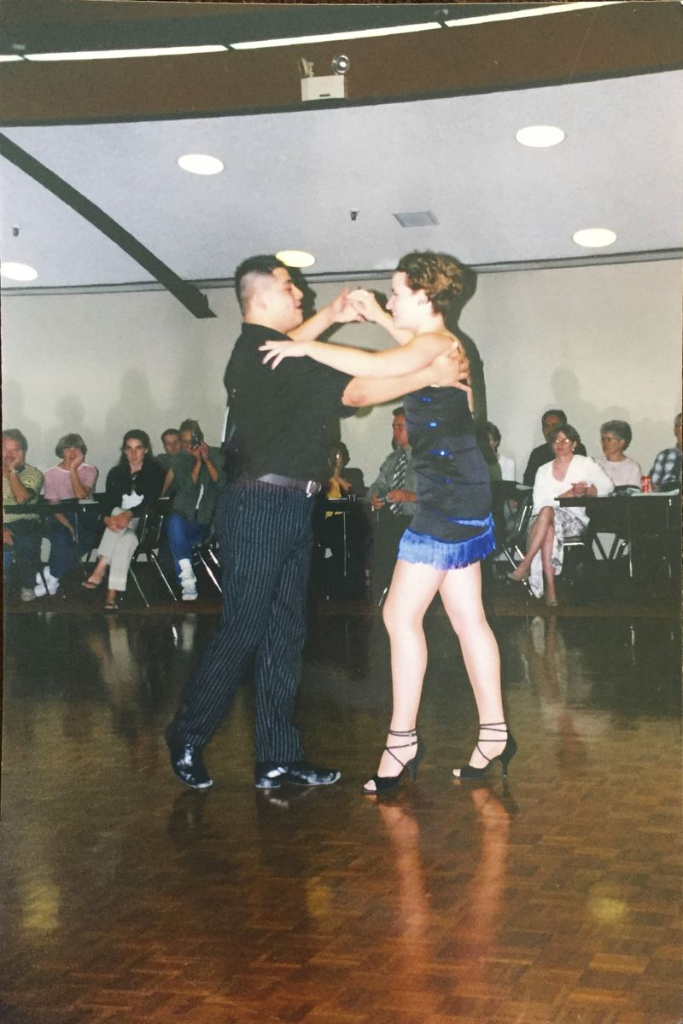
    2016-03-11 09-59

    me, at my first pro-am competition, looking super awesome

     And another one:

    image from http://s3.amazonaws.com/feather-files-aviary-prod-us-east-1/98739f1160a9458db215cec49fb033ee/2016-03-11/07154df54da04dca8047d7042dc81720.png

    kid #1 (the girl), making finals from a quarterfinal, and no, I didn't call them back for the final #humblebrag
  • The other day, I started a lively debate on The Facebooks about whether social and competitive dancing should be taught the same or differently.

    I was pretty vague with the question.  My exact words were, "Should social and competitive dancing be taught differently?  If yes, why?"

    What I really wanted you guys to do was read my mind and hear the whole conversation I had before posting that made me ask the question. 

    A group of [ambitious, very wise, and clearly forward-thinking] high schoolers recently formed a ballroom dance club and asked me to teach their group class each week.

    The president of the club was outlining their goals the other day and he reminded me that they are "just a social club". 

    "As opposed to what?" I asked.

    "Well, we're not looking at competitive dancing."

    "There's no difference," I automatically replied.

    "There isn't?" he asked incredulously.

    "Yes?" I answered similarly incredulously. My opinion was so swift and strong, I didn't even see it coming.

    But, there's not, right?  I mean, if you begin teaching a group of people, with no experience, the basics of ballroom dancing, there wouldn't be a difference in how you teach them… RIGHT?

    The field on Facebook was relatively split on whether this was true or not, but I feel like a lot of people who didn't agree that social and competitive dancing should be taught the same were thinking in the long term development of each branch, or were comparing "the social dances" (like West Coast Swing and Salsa) to "Dancesport" (Waltz, Bolero, and the like).  But maybe I just want everyone to agree with me.

    OF COURSE, social ("hey, I'm going to a social dance at the rec center tonight!") and competitive ("hey, I'm going to compete in the Silver Smooth division of Ohio Star Ball!") ballroom dancing should be taught differently eventually.  But for those first few months, when everyone's trying to remember the rhythm of Rumba and which foot they generally start with and not to look at their feet and what dance you can do a Twinkle in, IT'S ALL THE SAME.  

    There's dancing on the beat, standing up correctly, moving your weight from foot to foot, and the rest of this crazy pyramid:

    image from riotandfrolic.typepad.com

    On the plus side, when a friend ranted to me about it, he brought up my previous post about social and competitive dancing and WHEW I totally agree with myself still.  

    If you have more than a few minutes and you want to read up on the debate, it's pretty neat and more than one person is way more eloquent than me at explaining all sorts of things and philosophies and teaching techniques.

    4d3fbca9087c06e50b69c27cd9fe1fda

  • The ballroom world is full of brilliant people.  The number of PhDs, MDs, patents, and IQ points of my students alone is astounding.  Big-time CEOs and executives of multi-national companies enter studio doors every day.  Not to mention the amazing entrepreneurs, philanthropists, and creative enterprisers among us.  

    Enhanced-buzz-21811-1343055254-26

    To make such professional headway, all these people used their brains.  Their know-how.  Their book-learning.  Their people skills.  Their strategy.  Their street smarts.  

    Yet none of those things will help you learn how to dance.

    Okay, maybe you need your brain a bit.

    But the point is that to learn to dance, you need to move.  

    Not think.

    One thing is key when it comes to motor skill development: REPETITION.

    To develop the ever-desirable muscle memory, dancers need to do.  And then do it again.  And again and again and again.  

    Action

    By creating a habit of movement in your body, your cerebellum takes control of your movement by making it a long term, procedural memory (the same part of your brain and process you use to tie your shoes or walk up and down stairs).  More importantly, your cerebellum takes it away from your cerebrum, where all the thinking happens.  You know, the thinking, with the stopping, and the wondering, and the worrying, and the stressing, and the "why does this…", and the…WHO CARES SHUT UP AND DO IT TEN MORE TIMES.

    After asking students if they worked on a particular movement we'd been learning, I've had many of them reply, "I totally thought about it." Visualization is a GREAT tool, but it is also not entirely effective until you can actually do the thing you're picturing.  In other words, you can't learn a physical movement by thinking about it.

    [Some research says you can, but I've yet to witness it being effective in the learning stages of a movement.  It can be very helpful in preparation for performances and in the mastery stages.  See sources below. Yes, SOURCES.]

    After learning the proper technique, one has to use plenty of "touch time" (aka, time actually spent working on a product) to program their body to learn the skill.  By embracing your muscle memory, you create a habit in your body that is hard to ignore in times of stress.  Like those practice parties when that one really good dancer asks you to dance.  Or the final of that scholarship you danced four rounds of prelims to get into. 

    Now.  Notice I said "after learning the proper technique".  That means you need to be learning the proper technique first.  (And no, I don't mean all the technique first, like "why didn't I learn this when I started" technique. I mean, you need to be learning the right foundation for your skills to build on one another as you practice your basic step for 5 minutes a day.)  That means you have to find a teacher that you trust is doing that.  AND THEN DO IT. 

    AND THEN DO IT AGAIN. 

    AND AGAIN AND AGAIN AND AGAIN.


    fed

    i bet he practiced tying a bowtie AND his tennis swing

    Sources:

    Bergland, Christopher (2011, Oct 13) No. 1 Reason Practice Makes Perfect 

    Duhigg, Charles. The Power of Habit. Random House. 2014. Print.

    Lohr, Jim (2015, May 1) Can Visualizing Your Body Doing Something Help You Learn to Do It Better?

    Overby PhD, Lynette Y. and Bradely MFA, Karen (2003) Better Practice in Arts Education

    Wilmerding PhD, Virginia and Krasnow MS, Donna (2009, Nov 15) Motor Learning and Teaching Dance


  • 6a015431fc4e55970c01b8d0745a60970c-800wi

    This month's playlist starts off really slow with a pretty, morning-feeling, peaceful piano piece by Sigur Ros with a really creepy video that I don't recommend watching.  From there, things get trendy and then weird.  Like beards.


    Enjoy.

    4e2df32232a4f4d55344b922b3c190d5

  • "Historically, they make the finals," my friend said to some spectators who were interested in watching us dance. 

    I had to think pretty hard about her statement; it seemed too good to be true.  But yes, my partner and I have generally made finals.  We're not top 6 in the nation or anything, but at a decent quarter- to semi-final, we usually get to that coveted last round.

    That was not the case last weekend.  

    And I'm okay with that.

    We were dancing "at home" in a small, but devoted semi-final and we didn't make the last cut.  Many of my students and other audience members expressed their disapproval of the result ("You was robbed!" "Those judges!" "I had you winning!").

    But let's be serious…

    I watched the Rising Star (more or less the preliminaries to the Open Professional events) the night before and saw some great dancing.  Great dancing that might (or might not) be better than mine.

    I looked at the list of names in my heat and could immediately tell you the top three placements.  Using simple math, that means there's three spots left in the final.  And remember those great Rising Star dancers from the night before?  I liked them, the judges liked at least half of them,  and those judges haven't even seen me dance yet.  

    You might recall I have four kids, one that's under a year old.  Being totally kick-ass less than a year after having a baby is a trick.  And not one I'm sure I have down pat.

    We've gotten new choreography in the last year as well.  Another baby, of sorts.  And it has felt HORRIBLE at the last two comps we did.  Like, panic-attack-inducing, career-questioning AWFUL.  

    So I was hoping to be do several things during my time on the floor…

    A) not use my "thinking face", which is a hilarious, but performance-inappropriate facial expression.

    thinking face

    oops, it's also my helping face

    B) follow my dude.  I knew there'd be some situations in floor craft and I wanted to give him reign (since some of my problems in the past have been trying to help).  

    C) be brave.  Get close to people where I might usually "be nice" (and go way overboard doing so).  Throw myself around the way I know I'm supposed to and the way that makes our choreography work (you know, that whole counter-balance thing).  Emote.  Do my M*F*ing thing.

    throwing myself around

    rocking out (thanks, ha, for the photo)

    D) have fun.  The previous comps had been sooooooo bad and I didn't want any part of yuckiness again.  

    These might sound like RIDICULOUS goals for a professional dancer to have, but there you have it.  

    Well, the second I walked on the floor, I felt good.  I felt like I was supposed to be there.  Like I fit in.  

    And I crushed those goals.

    Happy dancing, fools.

    Ec8104117e7b747b3007f2809d40ab42

  • GSbc

    You guys.


    You guys.


    YOU GUYS.


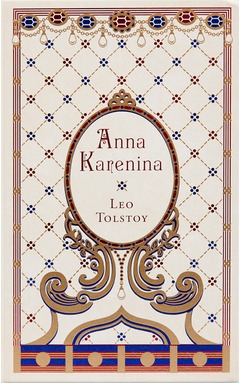
    I finished Anna Karenina.  

    15841795

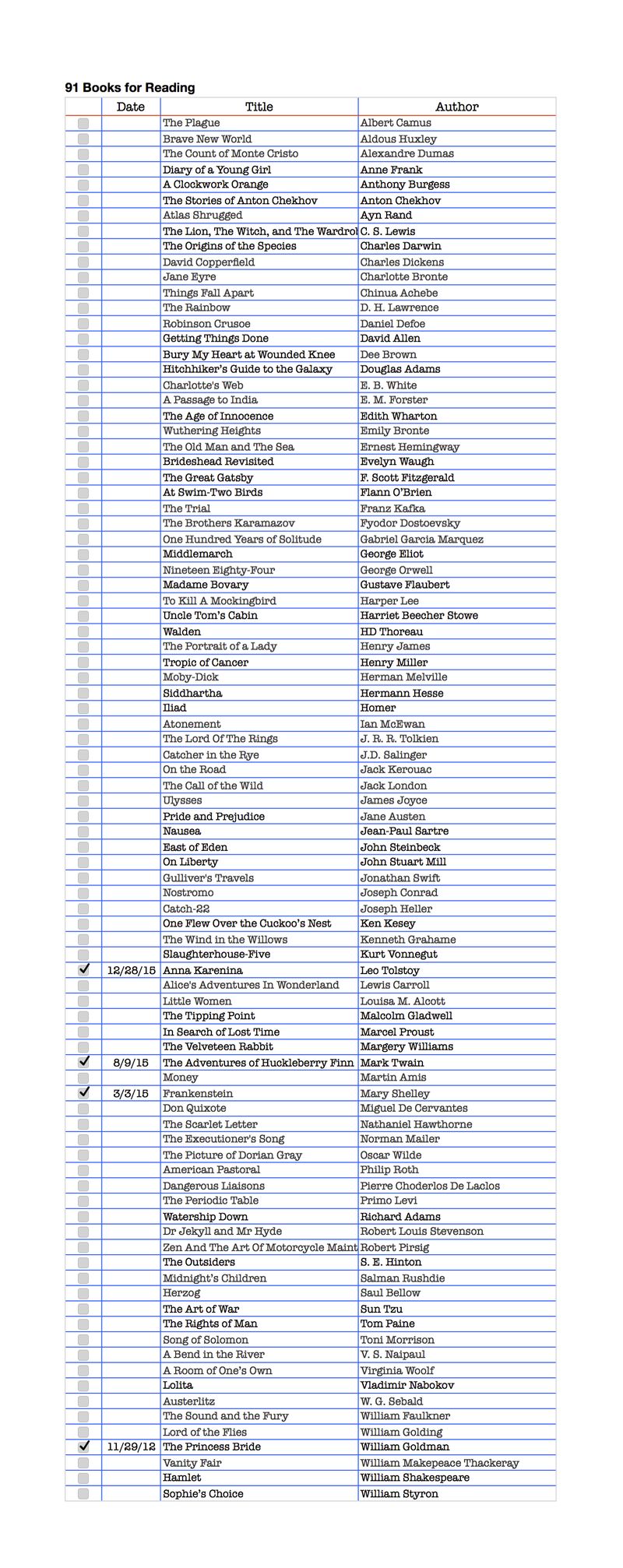
    Now, to refresh your memory, a million years ago, I figured up 91 books to make me smarter and then started the ill-attended, virtual book club (there's even a pseudo-book report to fill out for The Princess Bride!).  And then, THREE F*ING YEARS AGO, I started reading Anna Karenina… as Book #2.  

    SPOILER ALERTS

    I didn't know there was a need for spoiler alerts on classic novels, but when I told The [extremely well-read] G "well, you know, Anna has an affair and kills herself" as a prologue to my ranty retelling, he was a little surprised.  

    Other fun spoilers: Frankenstein isn't the monster's name and DOCTOR Frankenstein is an asshole, and Huck Finn ISN'T dead.

    So I'm a little behind on my book reports.  #historyrepeating

    Anna, as I loathingly will refer to the book, is dreadfully boring until page 351 (in my 800 page version), where a fairly minor character is described, at the bottom of the page, as a "big glossy green Dutch… [turn the page]… cucumber".

    … 

    Apparently this is where Tolstoy remembered people actually want obvious plot progression, character development, and witty and insightful prose.  

    Then it got interesting.  There's antisocial artists, boorish aristocrats, death-bed confessions, births, weddings, mysterious wealth, morphine, psychics, and of course, suicide.  

    Anna, the character, is introduced to you as an extroverted, life-of-the-party, delightful lady who happens to be married to a total bummer of the guy who she generally ignores to attend balls and concerts and visit society types.  Poor Anna, you think.  Life would be pretty good without that lame, old husband of yours, you pity.  

    But no.  Anna is the worst.  SHE IS THE WORST.  She's a jealous, crazy harlot who has no sense of consequence.  I went from kind of wanting to party with her to counting the pages until she hit that damn train station.

    On the other hand, Levin, this dude who starts out as the most awkward, loner, country mouse, working man you would NEVER want to party with, turns into the sweetest, relatable, lovely, loving, hard-working antagonist EVER.  Love him.  He's the perfect antidote to Anna's self-centered, defeatist, depressing, spiteful life.  

    Why couldn't the book be named "Konstantin Dmitrich Levin"?

    No?  Too much?  Doesn't exactly roll off the tongue like Annakarenina.  

    There was, as expected, some great discourse on politics, economy, religion and faith, distribution of wealth, and all those meaty topics.  I have several pages folded down that I've actually looked at since, because I found them so clever and inspiring.  On the small scale, I especially liked the insights to the male mind from Levin's perspective on his wedding and the birth of his first child.  

    Do I recommend the book?  Yes.  Would I lock you in a well-lit closet and slip you tasty snacks and beverages to make you finish it?  If you asked me.  

    Next up: Lolita (the most shoplifted book, according to my second-hand book store owner)

    And then: Zen and the Art of Motorcycle Maintenance (I've wanted to read this one FOREVER)

      0e661774db00b266406cfbe6633c5c26


    In case you were wondering what the stupid list is:

    Top##booksupdate

  • 6a015431fc4e55970c01b7c7f79673970b-800wi

    Okay, I'll admit.  I haven't been present for a full half of the ADVENTures this year.  But I've liked all the ones I've witnessed.  And that is something.  

    Day 1 : pinecone ornaments

    Is it just me, or does anyone else say "pinecorn"?

    I grabbed some pine…coooonnneees, a few jingle bells, a couple sticks of cinnamon, some yarn, and my brand new glue gun and asked the girls how they wanted to glue it all together.  We got ornaments that are rustic, vaguely similar to the inspirational ones, and I got to use a glue gun.  BAM.

    Day 2 : yarn-wrapped door

    We've already discussed this here

    Day 3 : make marshmallows

    This one is so great.  Everyone has an easy job (Zoo prepped the pan, Mae Cake threw the gelatin in the water, V kept an eye on the candy thermometer, I handle the hot stuff), it takes maybe 20 minutes, watching the ingredients go from boring to marshmallow fluff is NEAT, and you GET MARSHMALLOWS OUT OF IT.  

    I'm not even a big fan of marshmallows and I dig it.  

    Day 4 -12 : things that I missed

    We had an odd work and travel itinerary these days and we have amazing friends and relatives who will babysit our kids.  

    BUT NOW IT'S ON!

    Day 13 : Santa Lucia crowns

    IKEA (where once a Santa Lucia parade happened upon me while trying to make a bottle for a baby) and the phrase "star boy hats" put the whole Santa Lucia thing high on my list this year. Plus, that whole Nordic thing of totally winning at winter made me want ALL THE NORDIC THINGS.

    Day 14 : Santa Lucia parade

    We played this and the girls walked (and twirled) solemnly around the house.  


    Day 16 : cut paper snowflakes

    My brothers- and sisters-in-law set the bar very high in this category and I'm always a little disappointed my small children aren't giving those artistic 20-30-somethings more of a challenge.  But you know, practice, and hand-eye coordination, and spatial reasoning and all that probably gets better after age 8, right?

    How are your holiday adventures?  

    401da20e3c10338fb6b69225a4963f0a

  • In past years, I put together a list of ADVENTures (get it?  PUNNY) for the Christmas season.  The girls, doing that whole growing thing, have better hand/eye coordination, so we're totally upping our game this year.  But along with all the FAMILY TIME and CRAFTING and HOLIDAY SPIRIT, this mama is learning about PATIENCE and LETTING THE FUCK GO and GIVING GOOD DIRECTIONS.

    For example, on day 2 of the annual Adventures, the activity was "wrap yarn around the attic door from which to hang holiday cards". Simple enough, right?  But there were three pairs of little hands that wanted to help out, and I had to do something since they weren't tall enough to reach the top of the door.  And I had an idea in mind of what I thought it should look like. 

    I was reminded of a friend of mine who taught a programming class at Computer Camp (it's as delightfully nerdy as it sounds).  He would demonstrate how important it was to be highly specific and ordered when writing a computer program by bringing in a jar of peanut butter, a jar of jelly, a loaf of bread, and a knife and asking the kids to tell him how to make a PB&J sandwich.  

    "Put the peanut butter on the bread!"

    And he would put the jar of peanut butter on the loaf of bread.

    "Open the peanut butter!"

    And he would lift the jar over his head like he was going to smash it open.

    "Unscrew the lid from the top of the peanut butter jar."

    And he would turn it to the left.

    "Turn the lid to the right while holding the jar of peanut butter."

    And then it would open. 

    STEP ONE IS NOW COMPLETE.

    STEPS 2-10 STILL TO COME.

    Wrapping a door with yarn and the help of children was turning out to be similar lesson in communication.  

    But once everyone was involved and had a grasp of their job, we were on our way.  I'd drop the yarn over the door, Mae Cake would hold the yarn on the bottom of the door and hand the yarn to V, V would slide the yarn under the door and hand it to Zoo, who would hand the ball up to me, aaaaaaand repeat.  

    But as we wrapped and wrapped the door with green yarn, instead of parallel lines of thread, it was becoming a bit of a triangle.  Trying to explain "parallel" and "vertical" to small people while in the middle of a "fun thing" was failing.  Both in practice and my patience.  So, instead of NEEDING to have it MY WAY, I let it go.

    Df162a51e2e8d8bb665f413f6800027e

    Mae Cake became the commander of the operation, because for being 5, she has an excellent sense of aesthetic.  

    "Let's make it look like a tree!" she yelled and then proceeded to carefully arrange all the yarn into a more perfect triangle.  "Keep it tight!" she'd yell as the tension on the yarn slipped.  "Another loop!" she'd yell as she found a hole in her design.  Hence, the pretty bad-ass yarn-tree-door was born.

    Making circle ornaments, I could have been super-uptight about cutting out the circles on the lines, and really lining up the circles to glue together, and SUCKING ALL THE FUN OF PLAYING WITH SCISSORS AND GLUE, but I let them do their thing with minimal instruction and minimal stress about creating perfect Martha Stewart-esque heirloom-quality decorations.  

    Did they have fun? Yes.  Did they make something? Yes.  Was it cute? Yes.  

    THE END.

    I will thrill you with a pictures at the end of the week.  Because right now I'm in the land of slot machines, rhinestones, no visible clocks, and 24-hour Starbucks.  

    0f146c1bd32d9e72dd3d11ebdcc9f16c

  • image from riotandfrolic.typepad.com

    It's that time of year again, where I put more pressure on myself to create fun, family memories for the gang and create extra work, less sleep, and more to do for myself.  But I LIKE IT!  And FUN! And CHRISTMAS!  So, DO IT!

    If you haven't been here before, I make a list of neat things to do/make/watch/enjoy for each day leading up to Christmas.  And then do them.  And they are neat.  (Here's 2014, and 2013.)

    I'm not exactly giving you a sneak peek this year since we're already on day nine, but you can start following along at any time.  And if you're lucky, the rest of this will rhyme.

    ADVENTURES 2015

    1. make pinecone ornaments
    2. wrap yarn around attic door from which to hang holiday cards
    3. make marshmallows
    4. make santa beards
    5. make pom-poms to…
    6. play a snowman/Skee-ball game
    7. sew a paper garland
    8. make circle paper ornaments
    9. unwrap saran wrap doodads
    10. get candy
    11. see Holiday Lights in the Park 
    12. make Santa Lucia baskets
    13. make Santa Lucia crowns
    14. have a Santa Lucia parade
    15. make paper snowflakes
    16. eat cake with chocolate trees on it
    17. make window clings
    18. make perler gift tags
    19. make paper beads
    20. go ice skating
    21. make paper bead garland
    22. make egg crate doorbell
    23. make reindeer ornament
    24. play with embroidered stationery
    25. make paper chain dolls

    Some of these things are not reeeeeeally holiday-specific (um, eat cake on day 16? get candy on #10? unwrap saran wrap doodad?), but they worked with my birthday and desire to eat cake and make the cute chocolate trees, our travel plans, and not wanting to stress out my babysitters with craftiness overload.  FUN! CHRISTMAS! DO IT!

    I also have fallback plans, like a list of movies in case of adult meltdown.  And we'll get a tree and decorate it in there, and go hide packs of M&Ms in public places, and read lots of Christmas books, and that sort of thing. FUN! CHRISTMAS! DO IT!

    410d20cbf608f25abd801e255bdad2f7

  • There's a concept of "dancing down" in competitive ballroom that I get asked about. A LOT. 

    There's a couple ways I see it, one of which is okay and one of which is a bummer.


    The Bummer

    Let's say you see someone dancing a bunch of Silver freestyles and multi-dance events and also dancing in Bronze events. 

    This doesn't happen very often, and when it does, it sucks. But different comps have different rules as to how many levels you can dance, and some teachers (teachers are generally to "blame" here, not the students) decide to take advantage of the looser rules and enter some higher level students in lower level events. So they can win.  And "look good".

    On the plus side, I've seen very good Silver dancers get beaten in Bronze, or some dancers break the rules for that comp's level restrictions (accidentally or on purpose, who knows) and get DQ'ed.

    On the minus side, sometimes the dancer-downer wins over people dancing at the actual level.

    I usually mental DQ them in my head and award the next person first. But I have a very active imagination.

    The bad-ass

    Let's say you see someone whose proficiency level seems to be WAY higher than the level they're dancing in.  Like, they're dancing in Bronze and you can't tell who the pro is, or you watch them for a minute and say, "Are you kidding me?!"

    The second example SEEMS to happen more often, but there's several reasons behind it.

    Personally, The G and I don't let our students move up a level until they are KILLING IT at everything: both competitions and in lessons, technically and performance-wise (like all of that pyramid I did awhile ago).  Often, this means our Bronzey is dancing with Silvery technique.  

    It is NOT only so we can win often (though that is sometimes a nice by-product), but so our students grasp all the aspects of movement required (or implied) at each proficiency level and really enjoy dancing and are good at it (which also makes it easier to enjoy). We know what information is needed at a lower level to make the higher level easier and will make sure all that info is clear and being performed before moving someone up.

    I see SOOOOOO many dancers fail at the higher level because they just wanted to move up and their teacher let them (or the teacher didn't have enough info for them, or they both got bored, or whatever), yet they didn't have the foundation to build more difficult movement on. Boo. Hiss.

    For many instructors, it's also a sense of pride in our craft. We want our students to dance the best they can at whatever level they're dancing at because we want to enjoy it also. It's REALLY fulfilling to see your student do a great crossover break or amazing back twinkle, whether they win or not.

    Us teachers are mostly perfectionists, too, so it's hard to pass someone to the next level when they're still doing heel leads on 3 or can't keep their chin up in promenade. I would rather my Silver guys be dancing with Gold technique before they actually have to hit Gold patterns, so they aren't overwhelmed when the choreography changes.

    Selfishly, it's infinitely easier to dance with someone who knows what they're doing. If a student is super proficient, I don't have to work so hard to my job (or sometimes his, too).

    As an effect of all of this, having students dance really well also supports one's reputation, which makes it slightly easier to make a living. Yay for my mortgage!

    Rules and Such    

    I go back and forth about USADance's proficiency points deal. I've seen WAY too many couples get pushed up into levels they are so not ready for (ahem, THE OPEN LEVELS) and THEN even get all snooty about being in "Open" when they kind of HAD to be there, as opposed to learning and progressing there. 

    While it's sometimes a bummer that the NDCA doesn't have a proficiency system in place, I've seen people change instructors and move down a level because they never learned those foundational techniques.  They became a better dancer by dancing "easier" steps, not for the sake of winning or taking opportunity away from someone else, but so they could really accomplish the mastery of something they hadn't learned.  

    Or maybe an Silver Standard dancer wants to do Smooth, but has no idea what to do with their arms.  Yay for Bronze!  

    Conclusion?

    There's a HUGE scale of knowledge (I am nowhere near the top) amongst teachers, and a huge scale of perfectionism amongst those teachers, which makes for a huge scale in each proficiency level amongst students.  Ta-da!

    0e3a0a18af01eff5c3896024fcdc0b6a