The ballroom world is full of brilliant people. The number of PhDs, MDs, patents, and IQ points of my students alone is astounding. Big-time CEOs and executives of multi-national companies enter studio doors every day. Not to mention the amazing entrepreneurs, philanthropists, and creative enterprisers among us.

To make such professional headway, all these people used their brains. Their know-how. Their book-learning. Their people skills. Their strategy. Their street smarts.
Yet none of those things will help you learn how to dance.
Okay, maybe you need your brain a bit.
But the point is that to learn to dance, you need to move.
Not think.
One thing is key when it comes to motor skill development: REPETITION.
To develop the ever-desirable muscle memory, dancers need to do. And then do it again. And again and again and again.
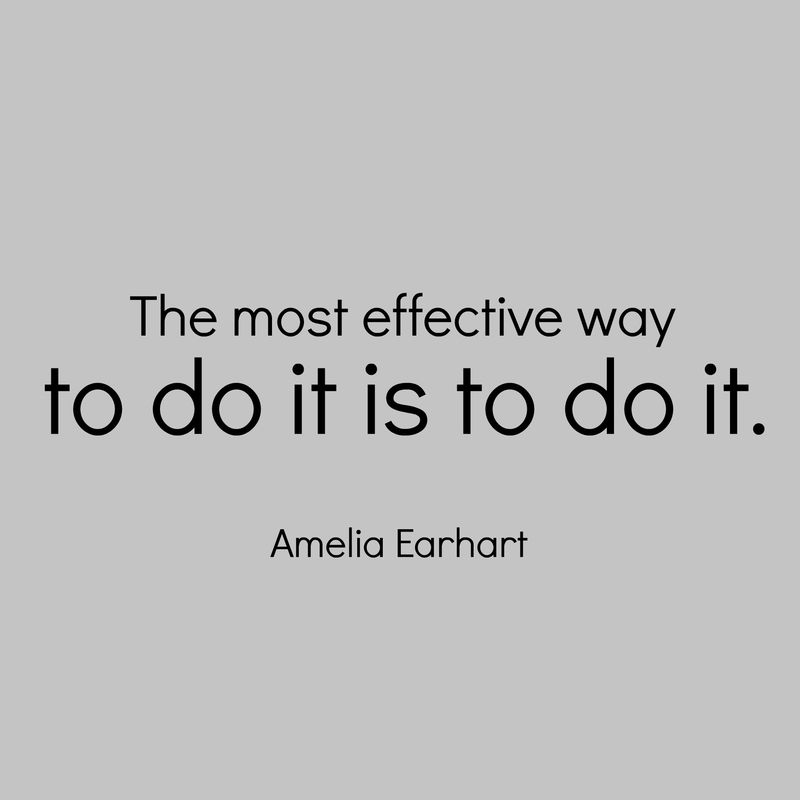
By creating a habit of movement in your body, your cerebellum takes control of your movement by making it a long term, procedural memory (the same part of your brain and process you use to tie your shoes or walk up and down stairs). More importantly, your cerebellum takes it away from your cerebrum, where all the thinking happens. You know, the thinking, with the stopping, and the wondering, and the worrying, and the stressing, and the "why does this…", and the…WHO CARES SHUT UP AND DO IT TEN MORE TIMES.
After asking students if they worked on a particular movement we'd been learning, I've had many of them reply, "I totally thought about it." Visualization is a GREAT tool, but it is also not entirely effective until you can actually do the thing you're picturing. In other words, you can't learn a physical movement by thinking about it.
[Some research says you can, but I've yet to witness it being effective in the learning stages of a movement. It can be very helpful in preparation for performances and in the mastery stages. See sources below. Yes, SOURCES.]
After learning the proper technique, one has to use plenty of "touch time" (aka, time actually spent working on a product) to program their body to learn the skill. By embracing your muscle memory, you create a habit in your body that is hard to ignore in times of stress. Like those practice parties when that one really good dancer asks you to dance. Or the final of that scholarship you danced four rounds of prelims to get into.
Now. Notice I said "after learning the proper technique". That means you need to be learning the proper technique first. (And no, I don't mean all the technique first, like "why didn't I learn this when I started" technique. I mean, you need to be learning the right foundation for your skills to build on one another as you practice your basic step for 5 minutes a day.) That means you have to find a teacher that you trust is doing that. AND THEN DO IT.
AND THEN DO IT AGAIN.
AND AGAIN AND AGAIN AND AGAIN.

Sources:
Bergland, Christopher (2011, Oct 13) No. 1 Reason Practice Makes Perfect
Duhigg, Charles. The Power of Habit. Random House. 2014. Print.
Lohr, Jim (2015, May 1) Can Visualizing Your Body Doing Something Help You Learn to Do It Better?
Overby PhD, Lynette Y. and Bradely MFA, Karen (2003) Better Practice in Arts Education
Wilmerding PhD, Virginia and Krasnow MS, Donna (2009, Nov 15) Motor Learning and Teaching Dance
 Riot and Frolic
Leave a comment